Violator — United for Thrash Violator — United for Thrash
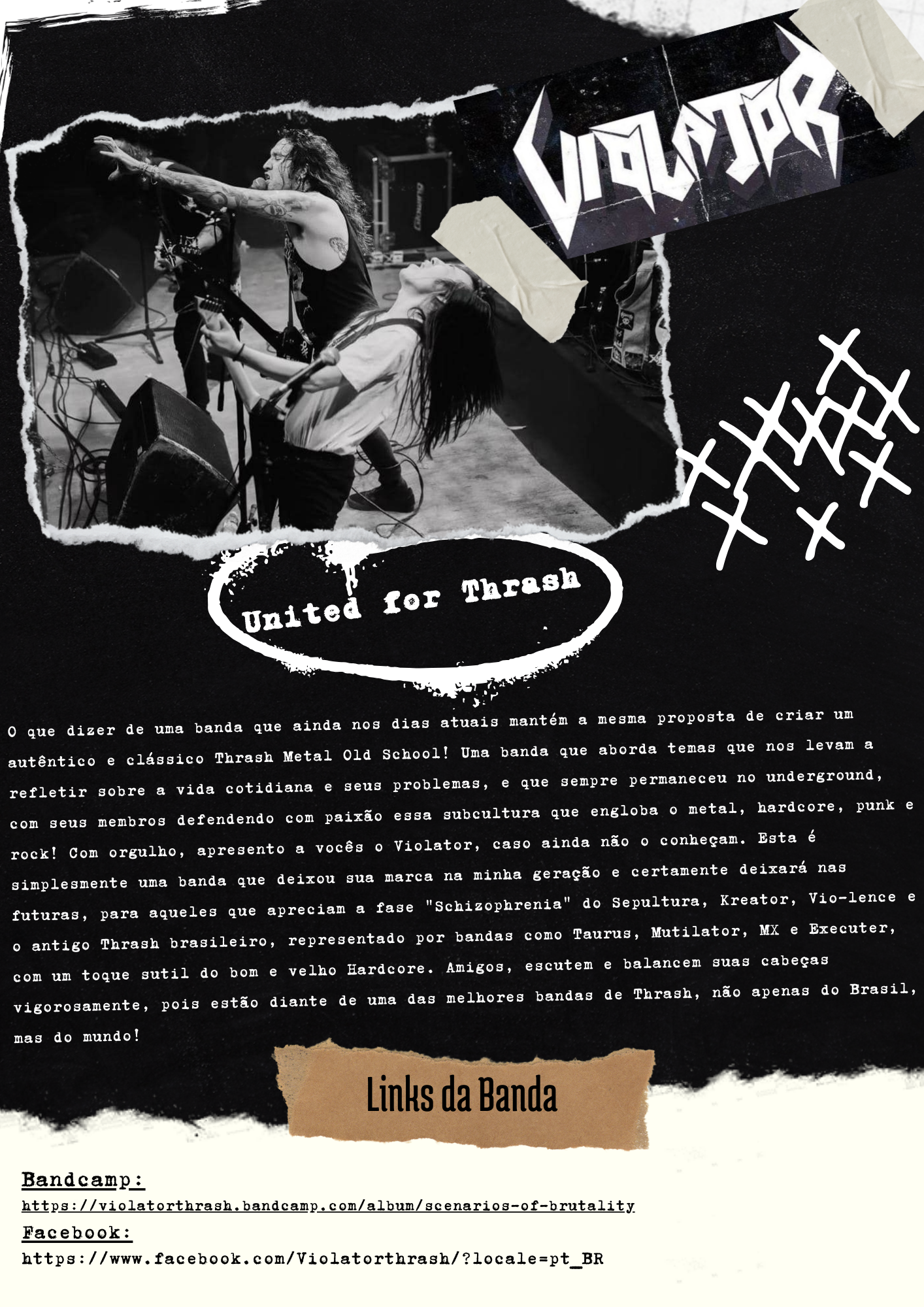
VIOLATOR: THRASH METAL, RESISTÊNCIA E ESPÍRITO UNDERGROUND DESDE 2002
Poucas bandas brasileiras representam tão bem a essência do thrash metal underground quanto o Violator. Formado em Brasília em 2002, o grupo surgiu da união de músicos que já tocavam juntos desde o final dos anos 1990 e compartilhavam uma insatisfação comum com os rumos da cena pesada da época, marcada pela ascensão de tendências mais comerciais e pela forte influência do nu metal.
A proposta era clara: resgatar a velocidade, a agressividade e a atitude contestadora que fizeram do thrash metal dos anos 1980 um dos movimentos mais importantes da música extrema.
A formação mais conhecida da banda reúne Pedro “Poney” Arcanjo (vocais e baixo), Capaça e Marcio “Cambito” (guitarras), além de Batera (bateria). Ao longo de sua trajetória, o grupo passou por pausas e reformulações, mas manteve intacta sua identidade musical e ideológica.
Uma trajetória construída no underground
Desde o início, o Violator escolheu trilhar um caminho distante das grandes gravadoras e das exigências do mercado musical tradicional. Guiada pela ética DIY (Do It Yourself), a banda consolidou sua carreira através da produção independente, do apoio de selos parceiros e da ligação direta com a cena underground, especialmente por meio da brasiliense Kill Again Records.
Essa postura garantiu ao grupo reconhecimento não apenas no Brasil, mas também no exterior. Ao longo dos anos, o Violator realizou turnês pela América Latina, Europa e Japão, conquistando admiradores em diferentes países e construindo uma reputação baseada na intensidade de suas apresentações ao vivo e na fidelidade ao thrash metal clássico.
Discografia
- Violent Mosh (2004)
- Chemical Assault (2006)
- Annihilation Process (EP, 2010)
- Scenarios of Brutality (2013)
- The Hidden Face of Death (EP, 2017)
- Unholy Retribution (2025)
O som do Violator
Inspirado por nomes fundamentais do metal extremo como Kreator, Slayer, Dark Angel, Whiplash, Sacrifice e Sepultura, o Violator desenvolveu uma sonoridade marcada por riffs velozes, baterias intensas, vocais agressivos e uma produção propositalmente crua.
Em entrevistas recentes, Pedro Poney descreveu a fase atual da banda como uma aproximação ainda maior de um thrash metal mais primitivo e sombrio, incorporando influências que dialogam com o proto-death metal e as vertentes mais extremas do gênero.
Música e posicionamento
Além da música, o Violator tornou-se conhecido por não separar arte e posicionamento político. Ao longo de sua carreira, a banda expressou opiniões críticas sobre temas como autoritarismo, militarismo, desigualdade social, racismo, fundamentalismo religioso e diferentes formas de opressão.
As letras e entrevistas do grupo frequentemente abordam questões relacionadas ao antifascismo, à liberdade de expressão, à resistência cultural e à independência da cena underground. Para os integrantes, o thrash metal sempre foi uma ferramenta de confronto e contestação, mantendo viva uma tradição histórica do gênero.
Em 2016, Pedro Poney declarou que a banda não vê problema em perder parte do público por conta de suas posições políticas, afirmando que discutir temas considerados essenciais é mais importante do que seguir interesses comerciais.
Essa abordagem foi aprofundada em Unholy Retribution (2025), trabalho que aborda temas como fanatismo religioso, neofascismo, militarismo, corrupção e violência estrutural. O álbum reafirma a disposição da banda em utilizar sua música como espaço de crítica social e reflexão.
O underground como escolha
Uma das características mais marcantes do Violator é sua rejeição à ideia de que toda banda precisa buscar o sucesso comercial ou viver exclusivamente da música. Os integrantes mantêm atividades profissionais fora do universo musical e defendem que essa independência é fundamental para preservar sua liberdade criativa.
Para o grupo, o underground não é um estágio temporário rumo ao mainstream, mas uma forma de organização baseada na amizade, na colaboração, na autonomia e na produção cultural independente. Essa filosofia influencia não apenas a maneira como o Violator grava e lança seus discos, mas também sua relação com o público e com outras bandas da cena.
Legado
Mais de duas décadas após sua formação, o Violator permanece como uma das referências do thrash metal brasileiro. Sua relevância vai além da velocidade dos riffs ou da agressividade de suas composições. A banda representa a união entre thrash metal old school, independência artística, consciência social e compromisso com os valores do underground.
Em uma época marcada pela padronização da cultura e pela transformação da arte em produto, o Violator segue fiel às suas convicções, mantendo viva a tradição de resistência, autenticidade e contestação que sempre estiveram no coração do metal extremo.
VIOLATOR: THRASH METAL, RESISTANCE, AND UNDERGROUND SPIRIT SINCE 2002
Few Brazilian bands embody the essence of underground thrash metal as well as Violator. Formed in Brasília in 2002, the group grew out of musicians who had been playing together since the late 1990s and shared a common dissatisfaction with the direction of the heavy scene at the time, marked by the rise of more commercial trends and the strong influence of nu metal.
The goal was clear: to bring back the speed, aggression, and defiant attitude that made 1980s thrash metal one of the most important movements in extreme music.
The band’s best-known lineup features Pedro “Poney” Arcanjo (vocals and bass), Capaça and Marcio “Cambito” (guitars), and Batera (drums). Over the years, the group has gone through breaks and lineup changes, but has kept its musical and ideological identity intact.
A path built in the underground
From the start, Violator chose a path far from the major labels and the demands of the traditional music market. Guided by DIY (Do It Yourself) ethics, the band built its career through independent production, the support of partner labels, and a direct connection to the underground scene, especially through Brasília’s Kill Again Records.
That stance earned the group recognition not only in Brazil but also abroad. Over the years, Violator has toured Latin America, Europe, and Japan, winning fans in different countries and building a reputation based on the intensity of its live shows and its loyalty to classic thrash metal.
Discography
- Violent Mosh (2004)
- Chemical Assault (2006)
- Annihilation Process (EP, 2010)
- Scenarios of Brutality (2013)
- The Hidden Face of Death (EP, 2017)
- Unholy Retribution (2025)
The sound of Violator
Inspired by cornerstone names of extreme metal such as Kreator, Slayer, Dark Angel, Whiplash, Sacrifice, and Sepultura, Violator developed a sound defined by fast riffs, intense drumming, aggressive vocals, and a deliberately raw production.
In recent interviews, Pedro Poney has described the band’s current phase as moving even closer to a more primitive, darker thrash metal, incorporating influences that connect with proto-death metal and the genre’s most extreme strains.
Music and stance
Beyond the music, Violator has become known for not separating art from political stance. Throughout its career, the band has voiced critical views on issues such as authoritarianism, militarism, social inequality, racism, religious fundamentalism, and different forms of oppression.
The group’s lyrics and interviews often address antifascism, freedom of expression, cultural resistance, and the independence of the underground scene. For its members, thrash metal has always been a tool for confrontation and protest, keeping a historic tradition of the genre alive.
In 2016, Pedro Poney stated that the band has no problem losing part of its audience because of its political positions, saying that discussing issues considered essential matters more than following commercial interests.
That approach was deepened on Unholy Retribution (2025), a record that tackles religious fanaticism, neofascism, militarism, corruption, and structural violence. The album reaffirms the band’s willingness to use its music as a space for social critique and reflection.
The underground as a choice
One of Violator’s most striking traits is its rejection of the idea that every band must chase commercial success or live solely off music. The members hold jobs outside the music world and argue that this independence is essential to preserving their creative freedom.
For the group, the underground isn’t a temporary stage on the way to the mainstream, but a way of organizing based on friendship, collaboration, autonomy, and independent cultural production. This philosophy shapes not only how Violator records and releases its albums, but also its relationship with the audience and with other bands in the scene.
Legacy
More than two decades after its formation, Violator remains one of the benchmarks of Brazilian thrash metal. Its relevance goes beyond the speed of its riffs or the aggression of its songs. The band stands for the union of old-school thrash metal, artistic independence, social awareness, and commitment to underground values.
In an age marked by the standardization of culture and the turning of art into product, Violator stays true to its convictions, keeping alive the tradition of resistance, authenticity, and protest that has always been at the heart of extreme metal.